Before you start
- Want to manage the sale? Consider a self-managed online listing.
- Want help finding buyers and negotiating? Ask a livestock agent.
- Have a sale date in mind? Discuss an auction with the selling agent.
Compare the main selling routes
This guide is from Saleyard, so our own marketplace is included. We focus on live cattle sales between farms; cattle ready for processing also warrant a separate processor quote.
| Route | What you pay for | Help with the sale | Your part |
|---|---|---|---|
| Self-managed marketplace | A listing fee or subscription; optional extras may cost more | An advert and a way for buyers to enquire or bid | Describe cattle, handle enquiries, agree payment and collection |
| Agent and private treaty | Quoted commission or fees for the agreed service | An agent helps arrange a farm-to-farm sale | Supply accurate details and agree price, terms and responsibilities |
| Saleyard or on-farm auction | Selling charges; confirm commission, yard, transport and other costs | Sale organisation and the auction process, depending on the service | Book stock, prepare cattle and paperwork, and agree any reserve |
Ask for the total cost in writing, including GST and any charges if the cattle do not sell. A low advertising fee can suit a seller who wants to manage the work. An agent’s service may be worth paying for when you need that help.
Trade Me, agOnline, PGG Wrightson and Saleyard
These are different ways to put cattle in front of buyers. Choose based on the selling service as well as the advertised fee.
Trade Me
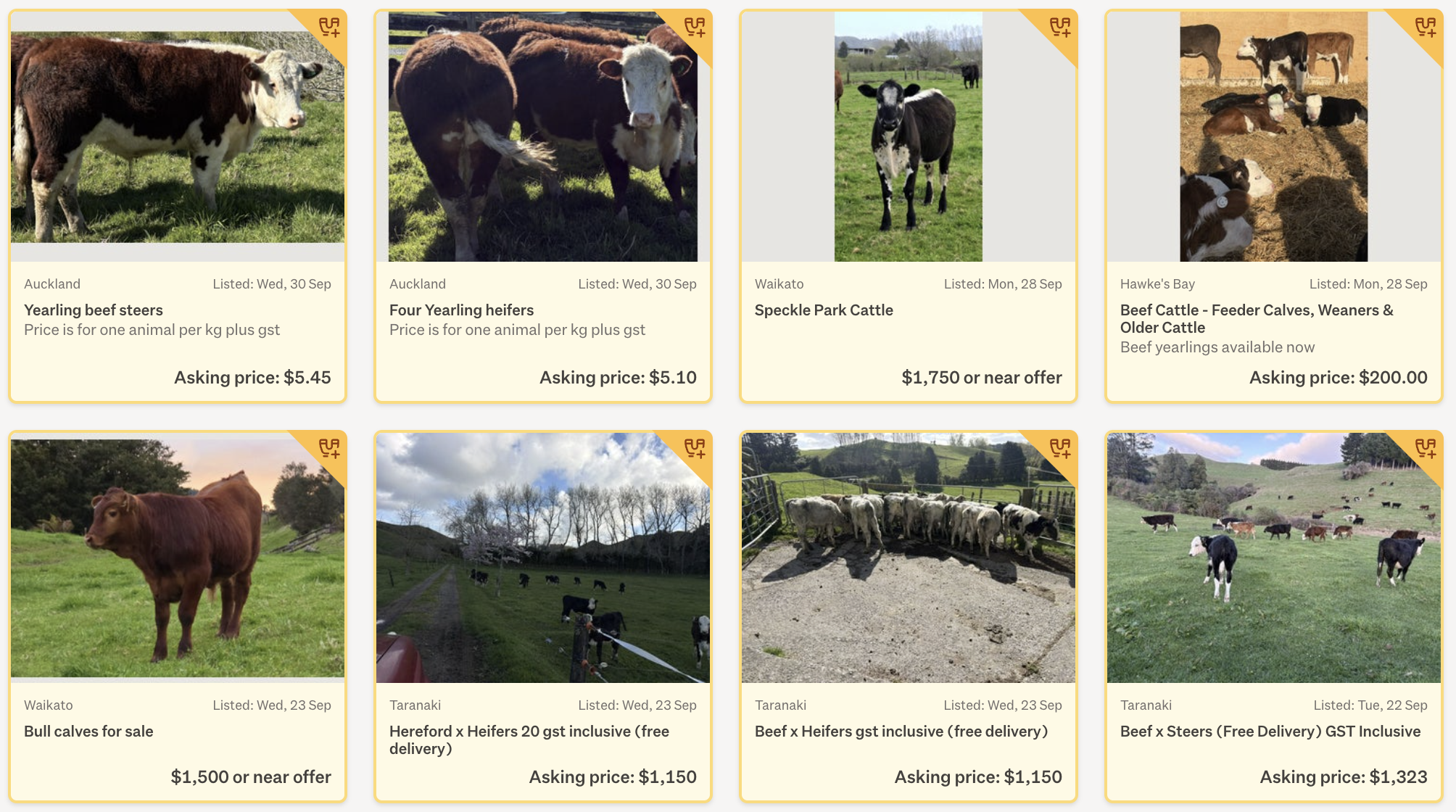
Trade Me’s published cattle listing fee is NZ$59. Listings can run for up to 14 days, relisting is free and there is no success fee. Promotional extras cost more and are charged again when relisting. Applicable payment charges are separate. Check the livestock section of Trade Me’s current fees.
Cattle can be listed as an auction or classified advert. You manage the listing and sale under Trade Me’s rules. Its site terms say selling fees include GST for New Zealand residents unless stated otherwise.
agOnline
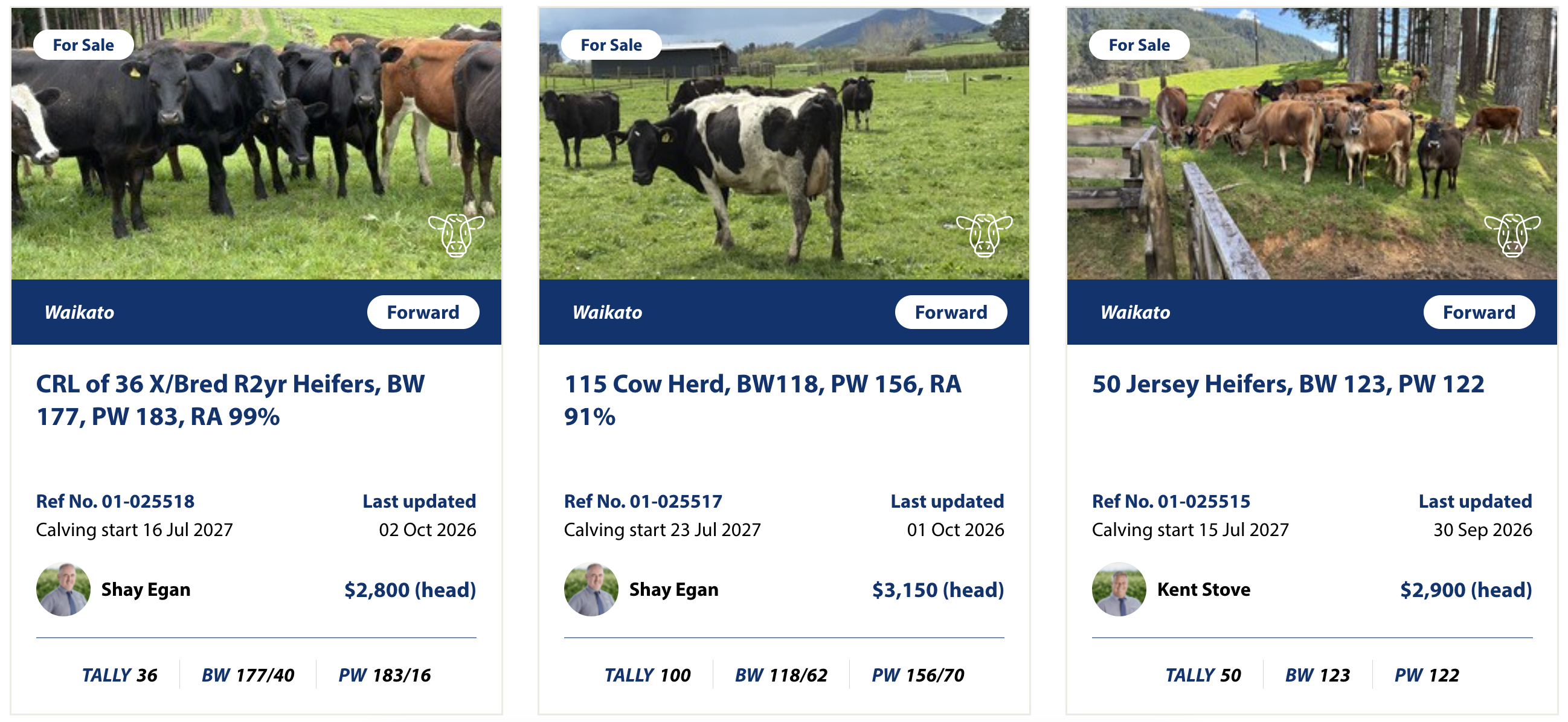
agOnline is PGG Wrightson’s livestock listing platform, supported by its livestock agents. Your PGW agent can help list stock on agOnline.
PGG Wrightson
PGG Wrightson offers private treaty, auction, on-farm and specialist stud sales. Its agOnline platform is part of this service, rather than a separate independent business.
Private treaty means a negotiated farm-to-farm sale through an agent. Ask your local rep which route suits the cattle, what they will handle and for a written fee quote. No universal seller fee is verified here; confirm the cost for your particular sale.
Saleyard
Saleyard is a self-managed cattle marketplace. Saleyard Pro includes unlimited cattle listings with no sale commission. It costs NZ$9.99/month or NZ$59.99/year, including GST. The annual option is a yearly payment. Membership details explain renewals and cancelling future renewals.
You prepare the description, photos and pricing, then deal directly with interested buyers. Browse cattle listings to see the format. Drafting is free; membership is needed when you are ready to publish, as explained on the selling page.
Finding an agent or a local auction
Compare agents who work with your cattle class and area. Useful starting points are PGG Wrightson’s directory, Carrfields’ livestock agents and dairy specialists and MyLiveStock’s agent list. The NZ Stock and Station Agents Association member list identifies member businesses, rather than every individual agent.
For auctions, check the operator’s current sale information and contact the selling agent before trucking cattle. National Saleyards is one starting point. Ask about booking, sale suitability, reserve arrangements, settlement and unsold-stock charges. An on-farm sale is another option to discuss for a larger line or specialist sale.
For price context, explore Saleyard’s saleyard results, including Feilding and Tuakau. Confirm upcoming sale arrangements directly with the operator.
Work out what the sale will leave you
Compare the likely sale proceeds after selling charges and any freight you pay. Include the time you will spend answering buyers and arranging inspections or loading.
Use recent NZ cattle prices and Saleyard’s tools and calculators for a starting point. Match the cattle class, weight, region and sale date as closely as possible. Those figures are market indications; the actual offer depends on your cattle and the buyer.
Selling a small lot
For two or three cattle, get a freight quote early. Transport and other fixed costs can make a noticeable difference per animal. Compare local collection with the cost and practicality of sending them to a sale.
Make the lot size, location, loading access and whether you will split the line clear. If you are unsure about handling the sale yourself, ask an agent whether they take small lots and whether minimum charges apply.
Before agreeing to sell
A useful advert includes head count, class, breed or cross, age, location, recent photos and a clear price basis. Give measured weights and the weighing date where available; label estimates honestly. Include relevant health and breeding information and disclose known issues.
- Agree exactly which cattle are included, the total price and how GST is treated.
- Agree the payment method, due date and what must happen before cattle leave.
- Confirm who books and pays for transport, the pickup window and loading arrangements.
- Confirm who handles the sale paperwork and movement records.
Check payment in your own account or through the agreed payment service rather than relying on a screenshot. With an agent, confirm settlement timing and what support or payment protection the agreement actually provides.
Check OSPRI’s buying and selling guidance for NAIT tagging, registration, movements and Animal Status Declarations. Selling through an accredited saleyard changes who records the sending movement, so confirm responsibilities before dispatch.
Common questions
Can I sell cattle without an agent?
Yes. You can arrange a direct sale through a self-managed marketplace. You will need to handle buyer enquiries, agreement, payment and collection, along with the relevant livestock paperwork.
Is the cheapest listing the cheapest way to sell?
It depends on the whole sale. Compare the fee, services, freight, time involved and expected proceeds. A cheaper advert alone does not establish which route will leave you better off.
Which option suits a first-time seller?
If you need help describing or pricing stock, organising buyers or understanding settlement, start with a local livestock agent. A self-managed listing can suit you if you are comfortable handling those steps.
Can I prepare a listing before paying?
On Saleyard, yes. You can add cattle details, photos and pricing and preview a draft for free. Activate membership when the listing is ready to publish.