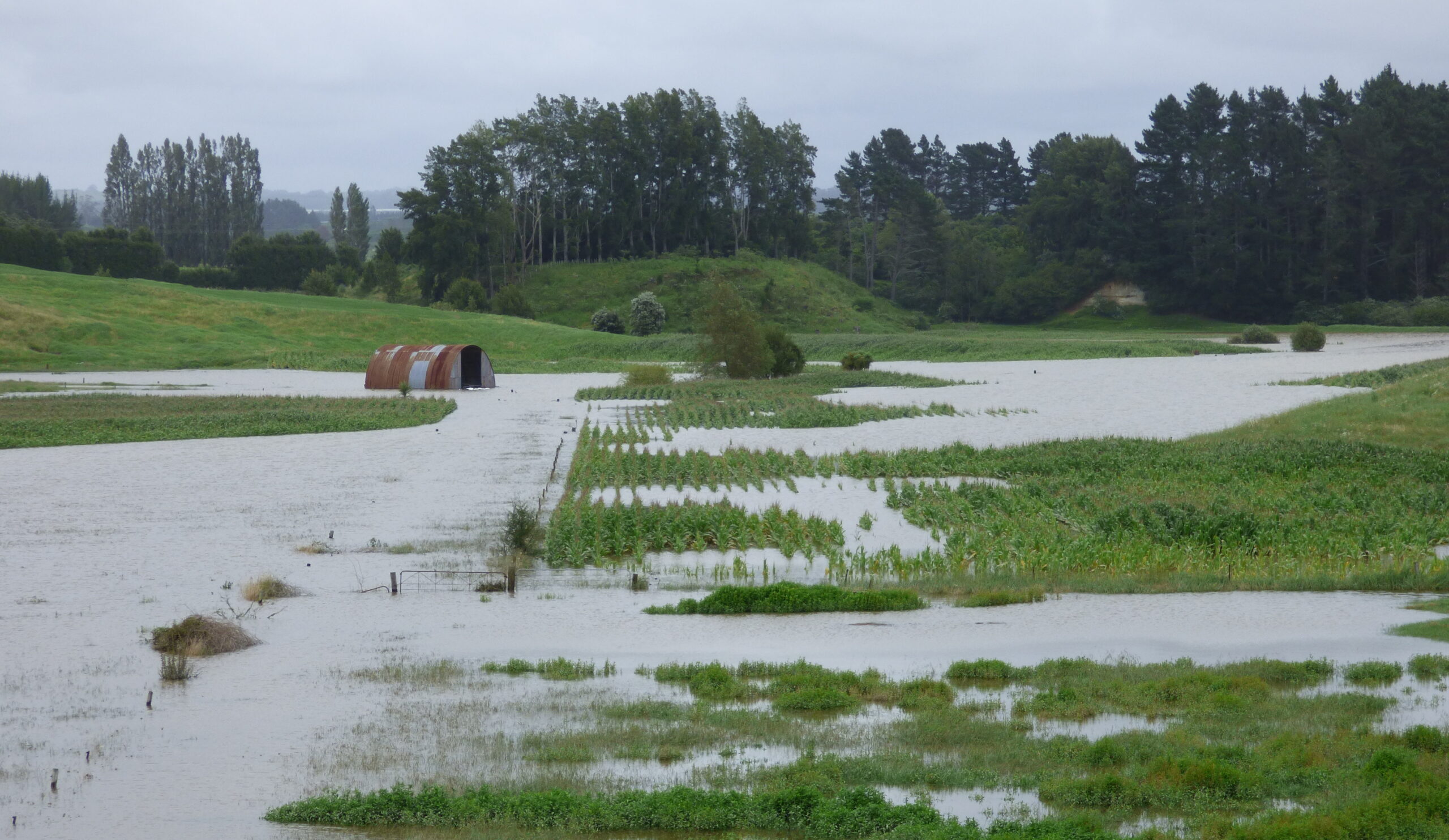
The Government’s decision to classify the wet and cold conditions across Southland and the Clutha District as a medium-scale adverse event is an acknowledgement that this is no longer an awkward run of weather for a few properties. It is a regional production and cashflow problem arriving at the busiest part of the livestock calendar. [1]
The classification, announced on 1 October, makes up to $50,000 available to the Southland and Otago Rural Support Trusts. It also opens the door to case-by-case tax relief and allows the Ministry of Social Development to consider Rural Assistance Payments where a farm business cannot meet a family’s essential living costs. It does not provide a general compensation payment for lost production or damaged pasture. [1] [4]
“Southland has had its wettest winter since 1980. The relentless wet and cold weather has been tough on farmers, growers, rural communities and livestock.” [1]
Earth Sciences New Zealand’s winter summary supports the scale of the problem. Winter rainfall was above normal, at 120–149% of the 1991–2020 average, or well above normal, at more than 149%, across Southland, Otago and other southern areas. A national winter that was warm on average did not protect southern farms from long periods of wet ground and difficult working conditions. [2]
The pasture bill arrives later
The first costs are visible: supplementary feed, extra labour, damaged races, bedding, animal-health work and the time spent shifting mobs around sodden ground. The more consequential cost can sit in the paddock. DairyNZ says pasture production in pugged paddocks can be reduced by 25–30%, because soil structure, clover, nitrogen fixation, earthworm activity and drainage are all affected. [5]
That loss changes the economics of the next grazing round as well as the present one. A paddock that appears to have carried the herd through a wet day may return less feed for weeks or months. If pasture cover is already low, widening the grazing area to chase intake can create a second problem by speeding up the round and leaving less grass ahead. [5] [6]
For dairy farms, the trade-off is especially sharp in early lactation. Wet conditions can reduce grazing time and pasture utilisation even when feed appears to be present. Lower intake then reaches beyond the milk vat: prolonged restriction can affect body condition and reproductive performance as mating approaches. Supplement may protect intake and the grazing round, but it also raises the seasonal feed bill and should be reduced only as pasture cover recovers. [5]
Sheep and beef farms face a different version of the same squeeze. Cold, wet conditions during lambing raise the demand for shelter, observation and intervention while saturated soils hold back pasture growth. The Government says this is the third difficult spring in a row for Southland and Clutha, which matters because feed reserves, paddock condition and staff resilience do not automatically reset between seasons. [1]
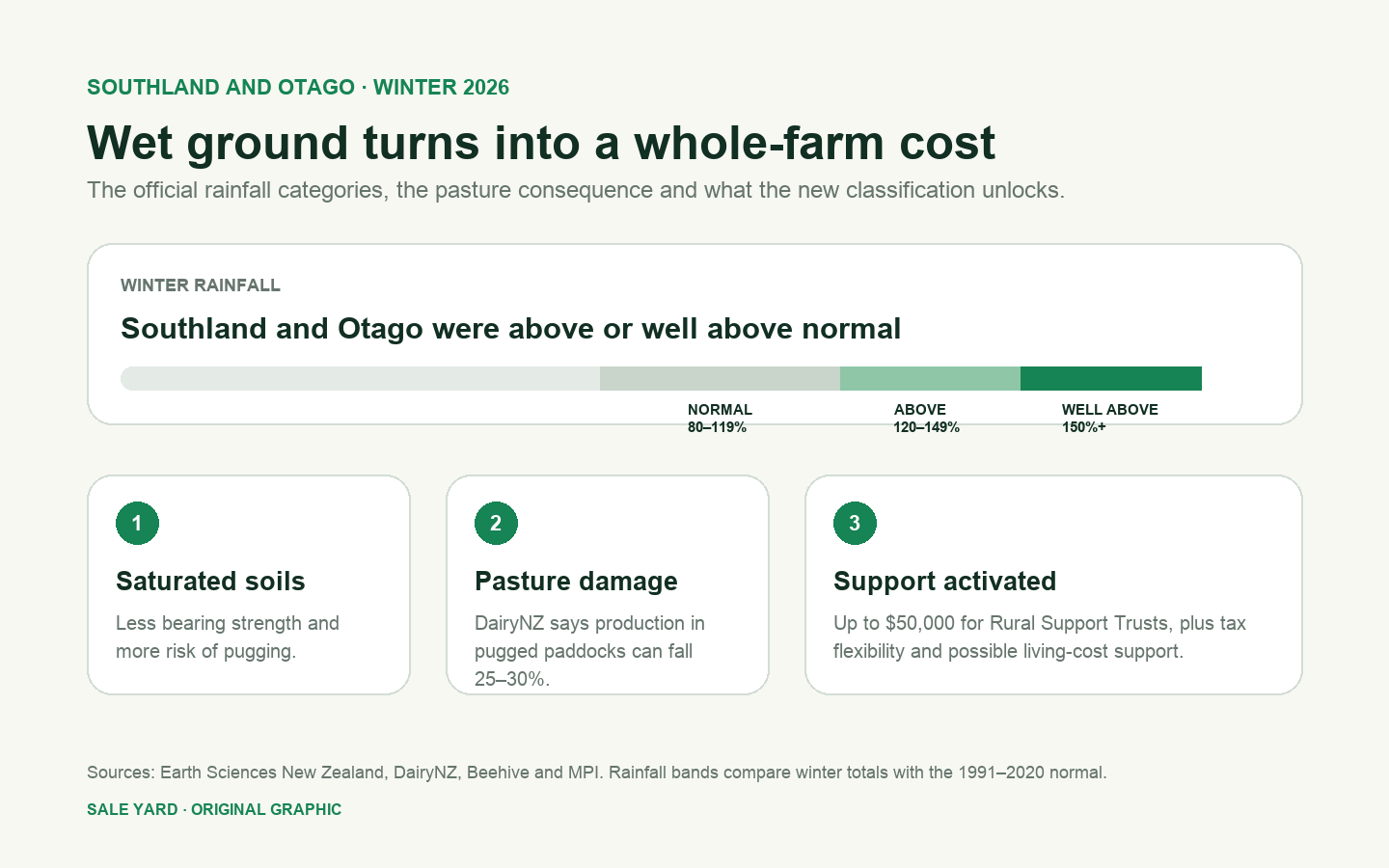
View chart data
| Measure | Value | Scope |
|---|---|---|
| Above-normal winter rainfall | 120–149% of normal | Parts of Southland and Otago |
| Well-above-normal winter rainfall | More than 149% of normal | Parts of Southland and Otago |
| Pasture production reduction in pugged paddocks | 25–30% | DairyNZ guidance |
| Rural Support Trust funding | Up to $50,000 | Southland and Otago trusts |
The three costs also reinforce one another. Standing stock off pasture can protect soil, but it requires suitable space, water, feed and effluent management. Keeping animals on pasture may preserve labour simplicity for the day, but deepen pugging and reduce the feed grown later. Buying supplement can protect intake and slow the round, while also committing cash before the full pasture recovery is known. There is no single lowest-cost response independent of a farm’s facilities and feed position. [5]
That is why recovery should be sequenced rather than treated as one repair job. First protect animal welfare and access to clean water and feed. Then separate paddocks likely to recover from those needing repair or renewal. Only after the new pasture position is visible can the farm sensibly reset supplement purchases, silage plans, fertiliser timing and any capital work. Spending early on the wrong constraint can preserve neither pasture nor cash. [5] [7]
What the classification changes
A medium-scale classification is best understood as a support trigger. Rural Support Trust funding helps put recovery and wellbeing assistance on the ground. Inland Revenue can consider measures such as flexible tax-payment timing, late provisional-tax estimates and use of the adverse-events income equalisation scheme. Rural Assistance Payments are a safety net for essential living costs, assessed against the circumstances of the affected family and business. [1] [4] [3]
That distinction is important for farm planning. The classification can ease a timing problem, connect a farmer with help and protect household cashflow in severe cases. It does not repair a damaged sward, buy feed for every affected business or replace the margin lost if stock performance falls. Those production consequences still have to be measured and managed farm by farm. [4] [3]
The useful numbers are now on each farm
The next decision is less about proving that the region has been wet and more about establishing what the weather has changed on a particular property. DairyNZ advises farmers to reassess pasture cover, growth, residuals and feed on hand, then identify which paddocks can recover and which need repair or renewal. It also advises protecting intake and welfare, including enough lying space when cows are stood off pasture. [5]
Those records have a financial use. A current feed budget shows whether extra supplement is bridging a genuine deficit or simply masking a round that has become too fast. Photographs and notes on damaged paddocks, races, culverts and fences can support conversations with insurers, banks, advisers and contractors. A separate household cashflow view helps establish whether tax flexibility is enough or whether living-cost support should be explored. [7] [4]
The regional declaration is therefore meaningful, but it is not the end of the assessment. The financial outcome will turn on three slower variables: how much pasture production has been lost, how much extra feed and labour are needed to carry stock through, and whether the farm can preserve options for the remainder of spring. Those are the figures that will show whether the damage was a difficult fortnight or a cost carried through the season. [5] [6]