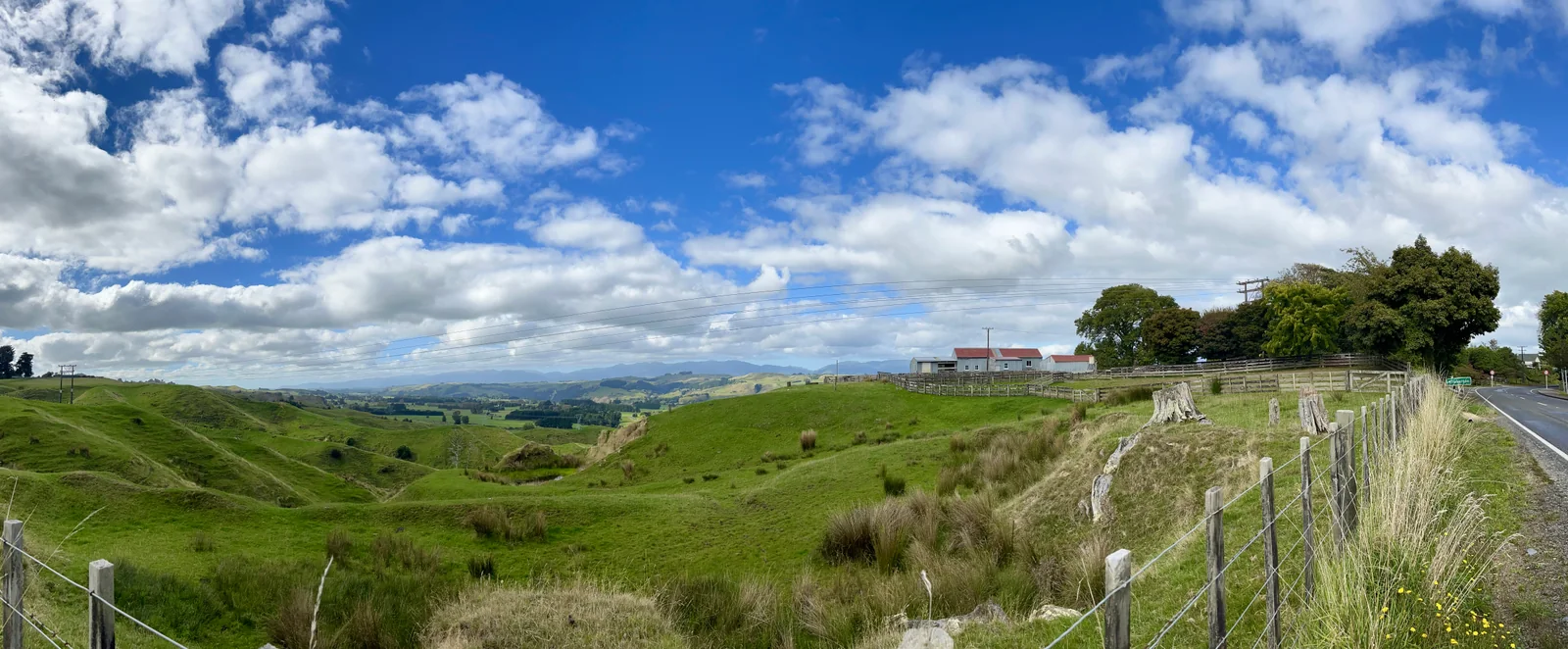

Rain in the forecast is not removing the dry-weather warning for North Island farmers. Horizons Regional Council says four months of below-average rainfall are now accompanied by groundwater deficits, while Earth Sciences New Zealand’s latest soil-moisture update identifies a new small hotspot near East Cape. Both updates were released on 28 October. [1] [2]
The practical distinction is between rain arriving, moisture available in the paddock and a dependable stock-water supply. Those conditions can move at different speeds. A forecast shower is useful information, but it is not a measurement of the water a farm can draw or the feed it can grow.
The warning is already in the monitoring network
Horizons group manager regional services and information Ged Shirley says regional rainfall has been well below average for the past four months, following three relatively dry years. The council identifies its Rangitīkei, Turakina and Manawatū groundwater monitoring sites as especially dry compared with long-term averages. [1]
Large rain events have not filled the gap. Shirley says “we have not seen the consistent rain required to meet average rainfall totals”. The council’s concern is about the accumulated deficit, rather than whether a particular front brings rain to one district. [1]
Those observations describe the council’s monitoring sites. They do not establish that every farm bore has the same deficit or that a particular water supply will fail. For an individual property, the useful next evidence is its own supply performance alongside the nearest relevant monitoring record.
Some rain, but limited recovery for dry soils
Earth Sciences New Zealand forecasts 10–30mm across much of the North Island over the next seven days from its 28 October outlook, with local totals up to 40mm, especially in central and western areas. Nevertheless, it expects small to moderate soil-moisture decreases across most of the island, with little change in central and western areas. [2]
Across the country, the contrast is sharp: heavy western South Island rain sits alongside limited falls in several northern and eastern districts. The regional ranges in the chart matter more to a farm than an impression that the country is turning wet. [2]
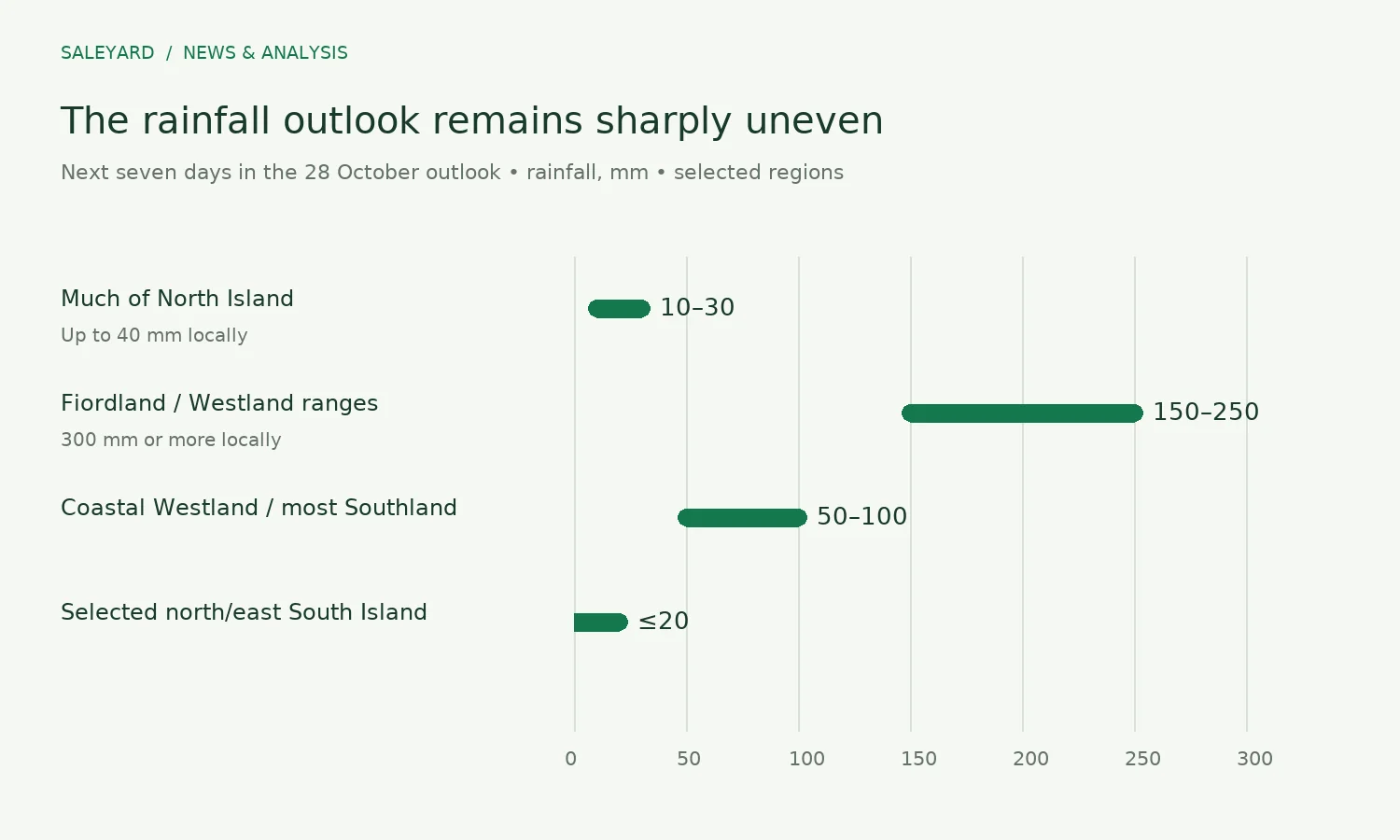
View chart data
| Selected region | Lower forecast total (mm) | Upper forecast total (mm) | Qualification |
|---|---|---|---|
| Much of North Island | 10 | 30 | Up to 40 mm locally |
| Fiordland / Westland ranges | 150 | 250 | 300 mm or more locally |
| Coastal Westland / most Southland | 50 | 100 | Selected areas in the source |
| Selected north/east South Island | Not specified | 20 | 20 mm or less; upper bound |
The East Cape hotspot is a soil-moisture signal, rather than a declaration that every farm in Gisborne is in drought. Nor should it be confused with groundwater conditions in Horizons’ separate region. The two updates describe different places and measures, but both challenge the idea that approaching rain alone resolves the risk.
Check the water system alongside the feed budget
Horizons’ dry-weather hub brings rainfall, river-flow and groundwater information together with preparation advice. It encourages farmers to check bores, pipes, troughs, irrigation systems and tanks, and to understand water-take consent conditions. These are practical checks that can be made before a supply problem becomes urgent. [3]
For stock farmers, a feed plan and a water plan need to describe the same business. Carrying more animals changes the demands placed on the property. Buying extra feed may help address a feed gap, but does not create a reliable water supply. Keeping the two decisions together exposes a constraint that a feed-only calculation can miss.
The financial value of checking early lies in retaining choices. A repair, a revised grazing allocation or a change in planned stock purchases is easier to assess before the business is committed. The right response still depends on the property; the monitoring releases do not provide a universal stocking adjustment or a farm-level loss estimate.
For now, the warning is specific: groundwater deficits are already being reported in Horizons’ network, and forecast rainfall is not expected to rebuild soil moisture across most of the North Island. Watch what the next rain actually changes on the farm, rather than treating its arrival as the end of the dry-weather problem. [1] [2]