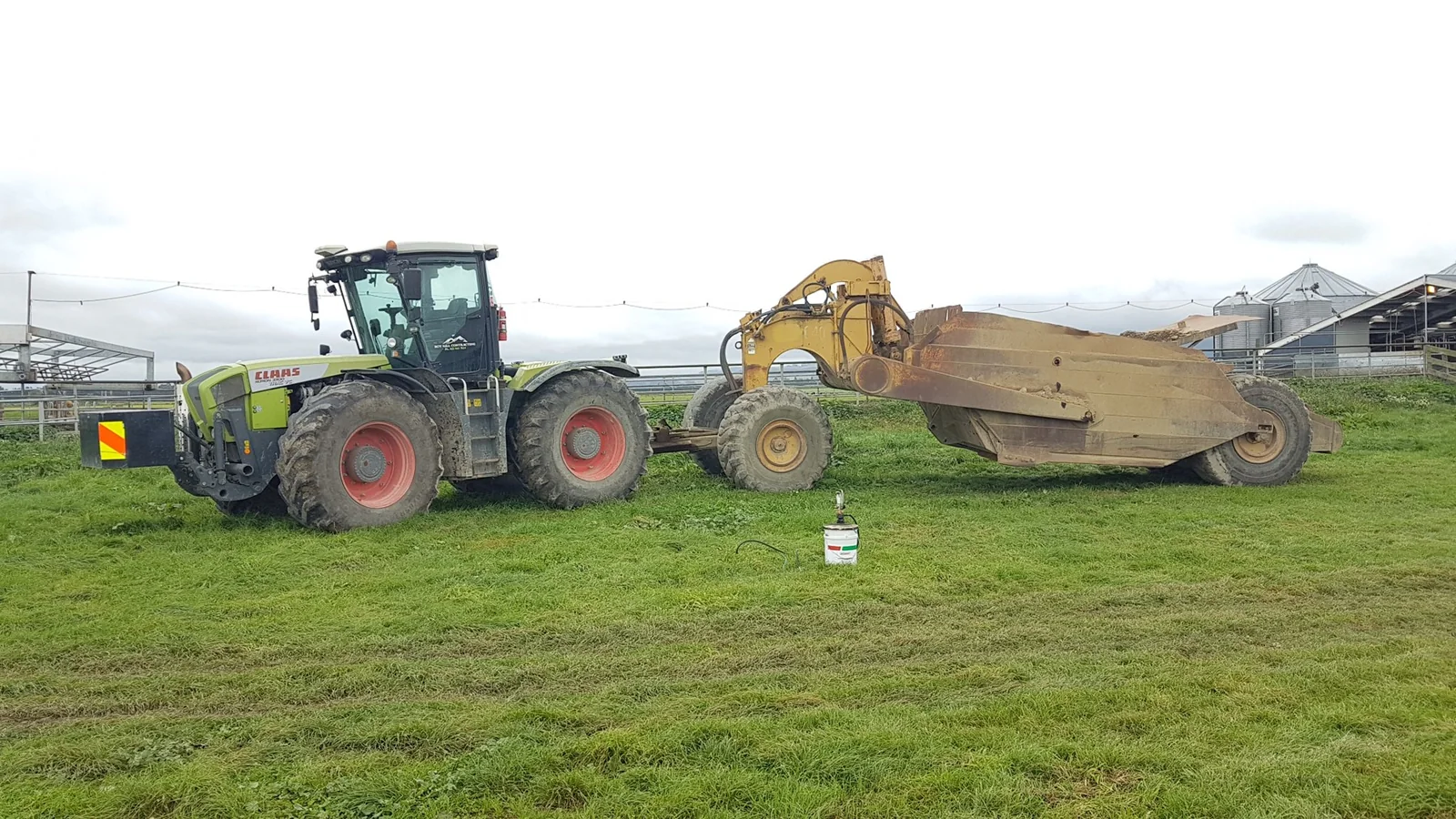

A proposed exemption from existing mass limits could change how rigid agricultural vehicles move on public roads, but the benefit will depend on the infrastructure restrictions that remain. The Government opened consultation on Monday on 28 heavy-vehicle proposals, including the agricultural exemption and wider changes intended to improve freight productivity. [1]
The announcement is a consultation, not permission to operate at a new weight. It does not establish a new blanket allowance for every farm truck, tractor or trailer combination. The agricultural proposal specifically concerns rigid agricultural vehicles and is subject to restrictions protecting critical infrastructure. [1]
The economic gain depends on the journey that can actually be made
For a farm or contractor, a theoretical increase in carrying capacity has value only if the vehicle can use the route needed. A trip still constrained by an infrastructure restriction may deliver less benefit than an identical vehicle working somewhere else. That makes the local route, rather than a national headline about more weight, central to assessing the proposal.
There are also two different opportunities in the package. One is moving eligible agricultural machinery with fewer regulatory obstacles. Another is carrying freight more efficiently. The Government proposes allowing heavy vehicles to carry more weight and offering overdimension operators greater flexibility about travel times and routes. The announcement does not mean every element applies to the same vehicle. [1]
One fewer trip can matter more than a percentage suggests
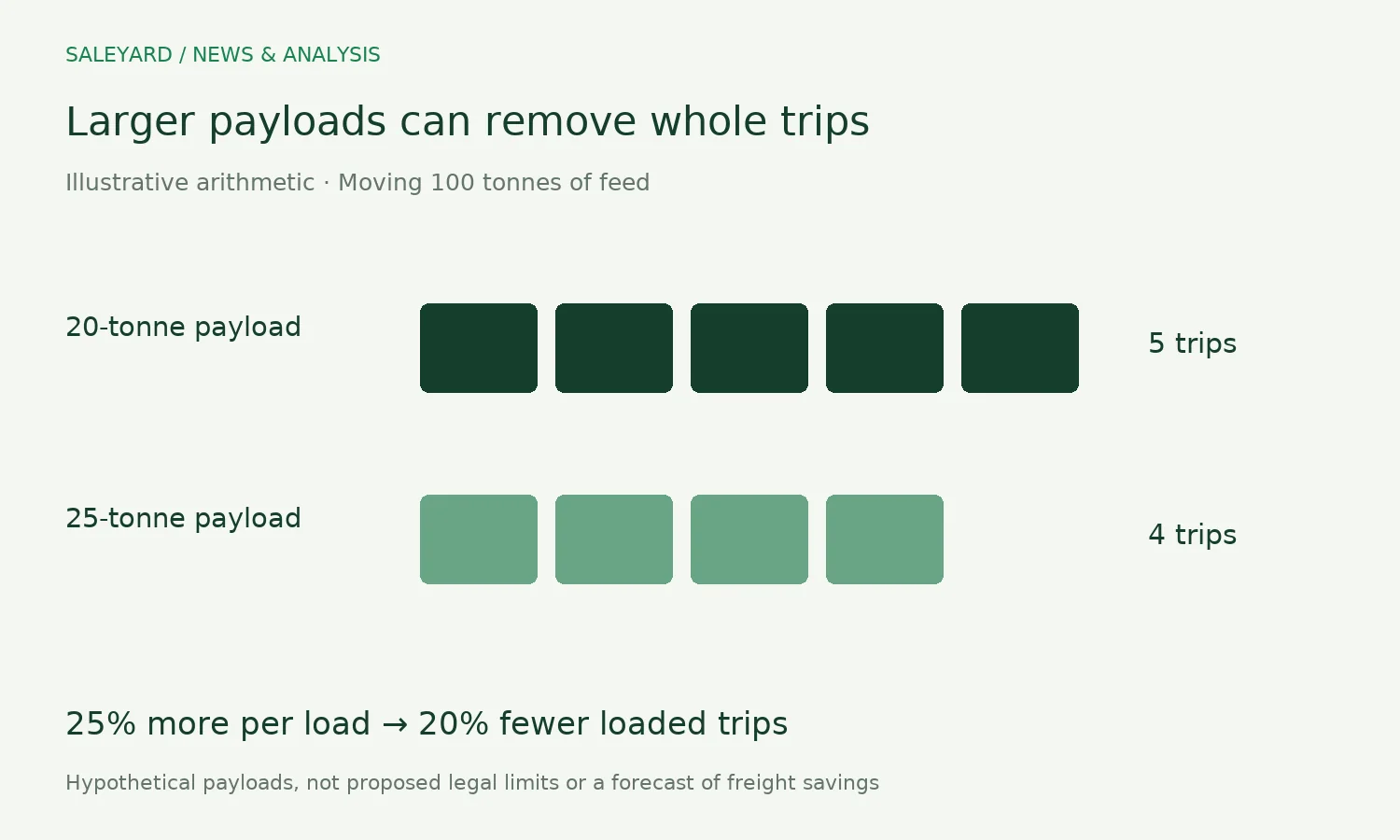
Consider a hypothetical delivery of 100 tonnes of feed. At a usable payload of 20 tonnes, the job needs five loaded trips. At 25 tonnes, it needs four. Carrying 25% more per load removes 20% of the loaded trips in this particular example.
View chart data
| Assumed payload (tonnes) | Cargo (tonnes) | Loaded trips |
|---|---|---|
| 20 | 100 | 5 |
| 25 | 100 | 4 |
Those are illustrative payloads, not proposed legal limits or quoted carrying capacities. The example shows the mechanism behind a possible saving: one less journey can remove time and distance from a job. It does not demonstrate that a freight invoice would fall by 20%.
The heavier load could cost more to move, and loading time, equipment costs and the operator’s pricing would still matter. The amount delivered matters too. A small order that fits on one vehicle already may gain little from a higher payload limit. Savings arrive when capacity removes a journey or makes a previously constrained job practicable.
Machinery access has a different payoff from freight capacity
For a contractor moving equipment between jobs, the important gain could instead be less administration or better scheduling. The Government also proposes streamlining applications where operators need both overdimension and overweight permits. Associate Transport Minister James Meager said: “Not every issue needs another rule.” [1]
That potential benefit cannot be measured from the announcement alone. An operator would need to compare the existing permit burden and travel constraints with the final requirements. Removing paperwork has less value where the real bottleneck is a restricted structure, vehicle availability or a narrow working window.
The strongest farm feedback will be specific
A useful submission can describe the vehicle, the journey and the work affected: where access is constrained, how often a permit is needed, and what time or cost follows. That is more informative than assuming all agricultural transport faces the same problem. It also helps distinguish an administrative obstacle from a restriction needed to protect infrastructure.
The Government’s announcement puts a potentially useful change on the table. Farm businesses assessing it need the eventual scope, route conditions and operating requirements before counting savings. For now, the opportunity is to show where the present rules impose avoidable cost, while recognising that a proposal is still several steps short of a usable entitlement.