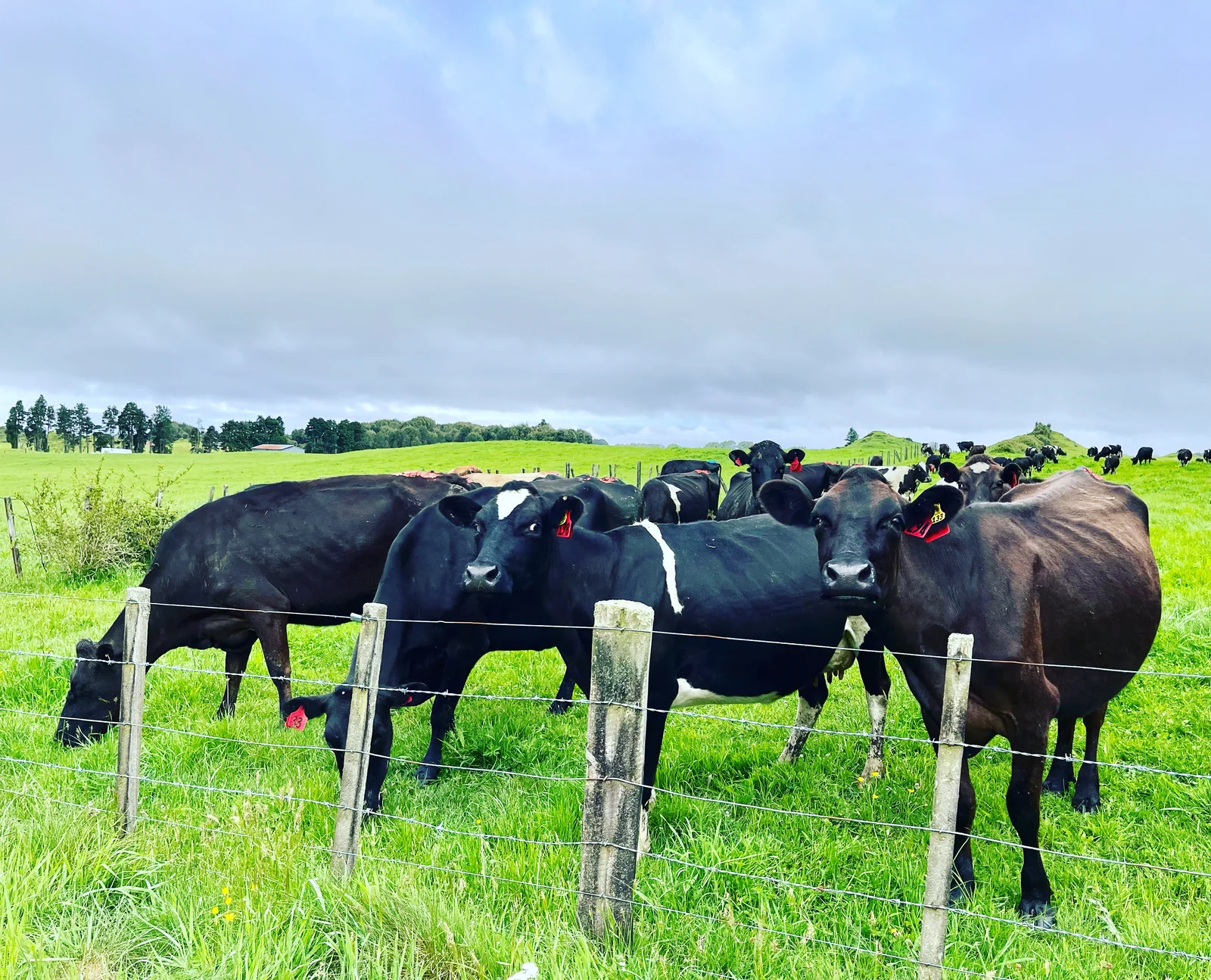

A Manawatū dairy farmer says a change in summer cropping helped reduce supplementary feed costs after benchmarking brought the farm’s performance into sharper focus. In a case study released on 21 October, DairyNZ describes how Kevin Argyle and his team used DairyBase comparisons before switching from turnips to fodder beet. [1]
Argyle’s Abba Farm covers 180 hectares and milks 600 cows. He told DairyNZ: “The cost per kilogram of dry matter is much better and yields are significantly higher.” The account is a farmer’s reported experience, published by the organisation that runs DairyBase, rather than an independent trial comparing crops. [1]
The saving is reported, but its size is not disclosed
DairyNZ’s release does not give before-and-after crop costs, measured yields or a dollar saving. It also does not date the crop change. The new development is the published case study, not evidence that a measured feed-cost reduction occurred this week. [1]
Those limits do not remove the useful question behind the story: what is the cost of the feed the business can actually use? A cheap hectare of crop is not necessarily cheap feed, and a high yield is not automatically a high return.
The denominator can change the answer
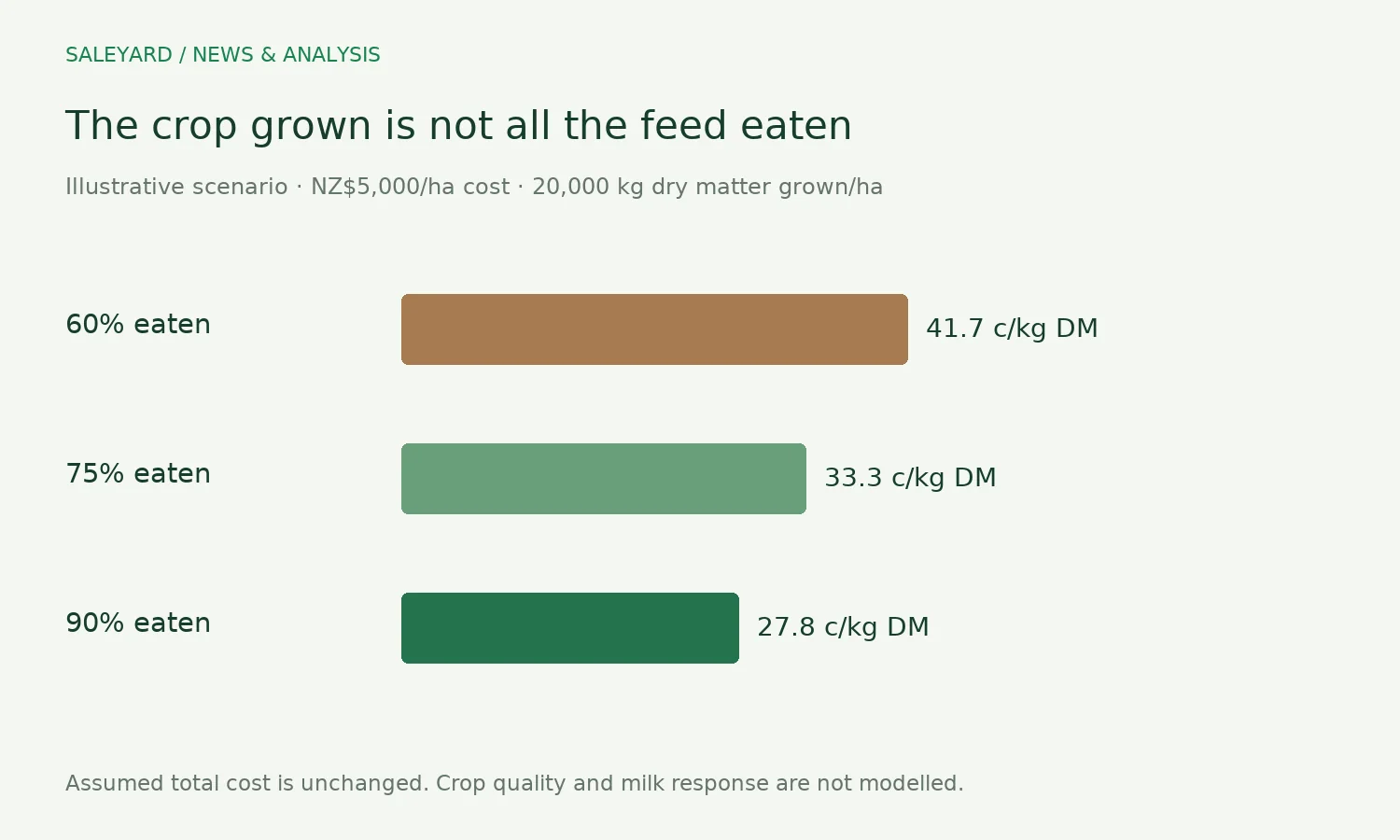
Consider a hypothetical crop costing NZ$5,000 a hectare and producing 20 tonnes of dry matter a hectare. Dividing cost by the amount grown gives 25 cents per kilogram of dry matter. If animals eat only 60% of that crop, the same assumed cost is spread across 12 tonnes consumed, lifting the cost to 41.7 cents per kilogram eaten.
View chart data
| Assumed utilisation (%) | Dry matter consumed (kg/ha) | Calculated cost (NZ cents/kg DM) |
|---|---|---|
| 60 | 12000 | 41.7 |
| 75 | 15000 | 33.3 |
| 90 | 18000 | 27.8 |
At 75% utilisation, the calculation becomes 33.3 cents; at 90%, it is 27.8 cents. These are illustrative calculations, not Argyle’s figures or predictions for turnips or fodder beet. They hold the total cost unchanged to isolate the effect of the amount eaten.
A real comparison would also need consistent cost boundaries. Establishment, fertiliser, land use, harvesting or feeding costs cannot be included for one option and omitted from another. Crop quality, the timing of feed supply and the milk produced from it would then help determine the commercial value.
Compare businesses that are actually comparable
DairyBase groups farms by factors including ownership, location and production system. Its guidance distinguishes financial measures from physical performance and requires at least 20 farms in a benchmark category before statistics are available. Its benchmark figures are group averages, not proof that every member has the same opportunity. [2]
The practical value is in identifying a difference worth investigating. Higher feed spending than a comparison group might reflect avoidable cost, but it could also reflect a different season or production strategy. Copying the lowest expense line without understanding the output it supports could make a business less profitable.
DairyNZ advises using physical and financial reports together. Its definitions also distinguish cash farm working expenses from operating expenses, which include non-cash adjustments. Interest is not included in those farm working and operating cost measures. A farm can therefore improve an operating metric while still facing pressure on cash available after financing commitments. [3] [2]
Better information is a starting point for a decision
The case study also reports that DairyBase has established data-sharing agreements with LIC’s MINDA and Farm Focus to reduce manual entry. That is a potential administrative benefit, but an automated transfer is not evidence that every input is complete or that two businesses are comparable. [4]
The strongest lesson from Argyle’s account is the sequence: compare the numbers, investigate the difference and test a change against the whole farm system. The report supports a closer look at feed economics. It does not establish that changing to fodder beet is the answer for every farm.